
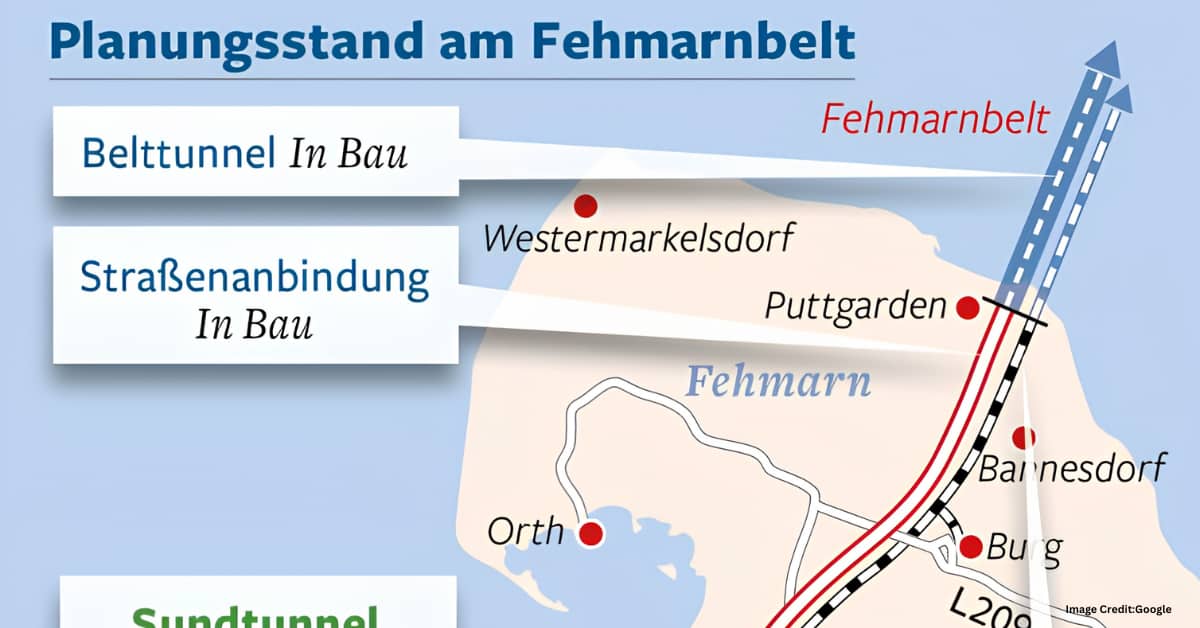
Fehmarnbelt Tunnel 2029: Inside Europe’s Most Ambitious Underwater Tunnel Project
The world is about to witness a feat of engineering that will permanently reshape travel between Scandinavia and Central Europe, and in May 2026, it crossed a defining threshold.
The Fehmarnbelt Tunnel, a groundbreaking undersea infrastructure project linking Denmark and Germany beneath the Baltic Sea, successfully installed its first colossal tunnel segment. What was once a bold blueprint is now, unmistakably, a structure taking shape on the ocean floor. Here’s everything you need to know about this record-breaking project, what it is, how it’s being built, and why it matters.
What Is the Fehmarnbelt Tunnel? Europe’s Longest Underwater Road and Rail Tunnel
Stretching approximately 18 kilometres beneath the Baltic Sea, the Fehmarnbelt Tunnel will directly connect the Danish island of Lolland to the German island of Fehmarn upon completion. It is designed to become the world’s longest immersed tube tunnel, surpassing all previous underwater road and rail connections.
To appreciate the scale of this achievement, consider the current reality: crossing the Fehmarnbelt strait today means boarding a ferry and spending around 60 minutes at sea. Once the tunnel opens, that same journey shrinks to just 7 minutes by train and around 10 minutes by car. For businesses, commuters, and travellers moving between Scandinavia and Central Europe, this is nothing short of transformational.
The tunnel will accommodate both a four-lane motorway and a two-track electrified railway, making it one of the most versatile and high-capacity fixed links ever built.
A Major 2026 Milestone: The First Segment Goes Into Place
In May 2026, the Fehmarnbelt Tunnel project reached its most significant construction milestone to date, the successful underwater installation of its first full tunnel segment.
That segment alone tells you everything about the ambition of this project. Measuring 217 metres in length and weighing an extraordinary 73,000 tonnes, it ranks among the largest single structures ever maneuvered into position underwater. Engineers placed it into a precisely dredged seabed trench with an error tolerance of no more than 3 millimetres, a margin so tight it borders on the miraculous, given the forces of water, current, and scale involved.
This method, known as the immersed tube technique, differs fundamentally from conventional tunnel boring. Rather than drilling through the seabed, engineers construct massive precast concrete elements on land, float them to the installation site, then carefully submerge and connect them in sequence. The Fehmarnbelt Tunnel will ultimately consist of 89 such elements, some of which weigh up to 73,000 tonnes each.
Budget, Backing, and the Road to 2029
The Fehmarnbelt Tunnel carries a total project budget of approximately €7.4 billion, funded primarily through Denmark and supported significantly by the European Commission, a clear indication of how strategically vital this link is considered across the continent.
Construction began on the Danish side in 2020 and on the German side in 2021, with the full project scheduled for completion and opening in 2029. When that date arrives, it will mark the culmination of decades of planning, years of construction, and a level of precision engineering few projects in history have demanded.
Why the Fehmarnbelt Tunnel Changes Everything
This isn’t just a tunnel, it’s a geopolitical and economic connector. By dramatically reducing transit times between Germany and Denmark, the fixed link will:
- Slash freight transport times across the Scandinavian–Mediterranean Corridor, one of Europe’s key trade arteries
- Make daily cross-border commuting viable for the first time
- Reduce dependency on ferry crossings and ease regional traffic congestion
- Strengthen economic and cultural ties between Northern and Central Europe
With its combination of record-breaking scale, cutting-edge construction methodology, and far-reaching strategic impact, the Fehmarnbelt Tunnel stands as one of the defining infrastructure achievements of the 21st century.
2029 can’t come soon enough.
Latest Posts
8-Lane Tunnel in India Opens June 20: Inside the Mukundra Hills Tiger Reserve Engineering Marvel

Vijay Trust Vote Win in Tamil Nadu Assembly: 144 Votes, AIADMK Split & Political Drama

Joseph Vijay Sworn In as Tamil Nadu Chief Minister: Courtesy Visits, Leader Greetings, and First Big Decisions

Pawan Kalyan Launches Hanuman Project to Tackle Human–Wildlife Conflict in Andhra Pradesh

Explosion At Andhra Pradesh Fireworks Factory in Kakinada Kills 20: Tragedy Turns Village Black

Vijay Deverakonda Rashmika Mandanna Wedding: First Public Appearance as Mr & Mrs Looks Magical!

India-Israel Ties Reach New Heights: Modi-Netanyahu Seal Special Strategic Partnership

The Breeze Ananthagiri: Eco-Trekking Escape from Hyderabad