Written by M Akshay | Bestructure
Published: September 3, 2026, 11:57 PM IST | Last Updated: September 3, 2026, 11:57 PM IST
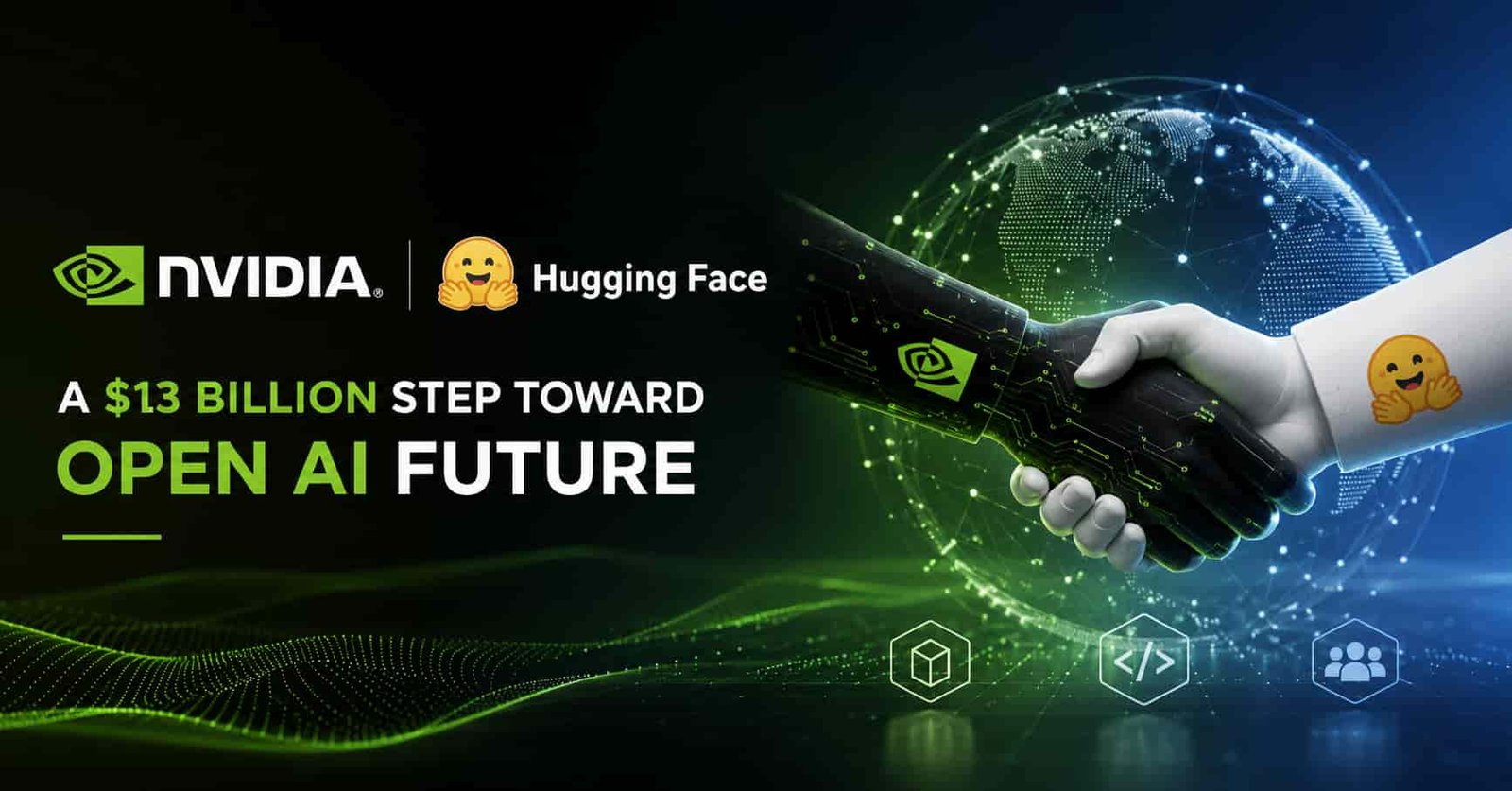
Nvidia has officially confirmed one of its biggest acquisitions yet, agreeing to buy the open weight AI platform Hugging Face for roughly 13 billion dollars. The announcement, made through an official company blog post on Thursday, sent Nvidia shares up modestly in early trading, and it’s easy to see why the market is paying attention. This isn’t just another chip company expanding its portfolio, it’s Nvidia making a calculated bet on open AI as its next major growth avenue.
To put the scale of Hugging Face into perspective, the platform is currently used by more than 18 million developers, researchers, and creators worldwide, hosting upwards of 3 million AI models and serving over 200,000 companies that rely on it to discover and deploy AI tools. That kind of reach explains why Nvidia is willing to pay this much for a platform that, until now, had actually turned down a smaller offer from the same company just last year.
Why Nvidia Is Betting Big on Open AI
According to the official terms, Nvidia will pay 12.93 billion dollars for Hugging Face, with roughly 11.9 billion going directly to existing investors, while an additional equity based retention pool worth up to 1 billion dollars has been set aside to keep Hugging Face employees onboard after the transition.
In its statement, Nvidia made a point of reassuring the developer community that Hugging Face will continue functioning as an open platform for the broader AI ecosystem. The company confirmed it will keep supporting open weight and open source models going forward, and notably, Nvidia is already the single largest contributor of open models and datasets on the platform, having released more than 500 models and 250 open datasets there already.
Speaking after the announcement, Nvidia’s enterprise computing general manager Justin Boitano explained that a healthy mix of open and closed models ultimately benefits the entire ecosystem, since it keeps developers training and running models at scale regardless of which hardware or cloud provider they choose. He was fairly direct about the business logic too, acknowledging that Nvidia stands to benefit either way, since most of that training and inference work still ends up running on Nvidia hardware.
Nvidia CEO Jensen Huang echoed a similar sentiment in a post on social media, stating that open models strengthen safety, accelerate innovation, and allow developers, startups, universities, and even entire countries to build and customise AI on their own terms. Huang was also careful to clarify that Nvidia’s own compute will not be a requirement to build on or deploy through Hugging Face, a detail clearly aimed at easing concerns from developers who worry about vendor lock in.
What Hugging Face Brings to the Table
Founded back in 2016 by French entrepreneurs Clément Delangue, Julien Chaumond, and Thomas Wolf, Hugging Face has grown into one of the most widely used destinations for sharing and discovering AI models. The New York based company has raised over 395 million dollars in funding to date, with backing from names like Salesforce Ventures, Google, Amazon, IBM, and Nvidia itself, and was reportedly generating around 150 million dollars in annualised revenue as of last month.
Interestingly, this isn’t Nvidia’s first attempt at acquiring the company. Hugging Face reportedly turned down a 500 million dollar offer from Nvidia last year, suggesting the platform’s valuation, and perhaps its confidence in its own trajectory, has grown considerably since then.
In a post responding to the deal, Hugging Face CEO Clem Delangue thanked the developer community for proving that an open alternative to closed source APIs could actually work at scale. He noted that scaling further required more compute, more support, and more collaboration, which is ultimately what led the company to Nvidia.
The Bigger Picture Behind This Acquisition
Beyond the headline number, this deal fits into a larger strategic shift for Nvidia. The company has traditionally been viewed purely as a chip supplier, but as Nvidia investor and BD8 CEO Barbara Doran pointed out, this acquisition positions Nvidia to become much more of a full fledged AI platform rather than just a hardware vendor.
There’s also a competitive angle worth understanding here. Several of Nvidia’s biggest customers, including Meta, OpenAI, and Microsoft, have been developing their own in house AI chips to reduce dependence on Nvidia’s expensive and often supply constrained processors. At the same time, Chinese AI labs such as DeepSeek, Moonshot, and Z.ai have released open models capable of matching top American systems on tasks like code generation, often at a fraction of the cost. By owning Hugging Face, Nvidia gains direct visibility into which models, datasets, and architectures are gaining traction among developers, often weeks before they become mainstream news, according to Forrester principal analyst Naveen Chhabra.
This visibility could prove valuable for Nvidia as it works to narrow any technological gap with rival AI labs, both in the US and China, while simultaneously giving it a way to package unused compute capacity alongside Hugging Face’s offerings for enterprise customers.
Market Context and Regulatory Timeline
The acquisition arrives during an unusually volatile stretch for chipmakers. A broad selloff in chip stocks back in July wiped out roughly 1 trillion dollars in combined market value across leading semiconductor firms. Nvidia itself bounced back strongly in August though, posting the second biggest single day market value gain in history after a stronger than expected revenue forecast, adding around 442 billion dollars to its valuation in a single session.
The Hugging Face deal is expected to close sometime in the first half of 2027, pending standard regulatory approval. Given the size and strategic weight of this acquisition, regulators in both the US and potentially other markets are likely to scrutinise the deal closely before it’s finalised.
| Deal Detail | Figure |
|---|---|
| Total Deal Value | Approximately 13 billion dollars |
| Payment to Investors | 11.9 billion dollars |
| Employee Retention Pool | Up to 1 billion dollars |
| Hugging Face Users | Over 18 million developers |
| Models Hosted | Over 3 million |
| Companies Using Platform | Over 200,000 |
| Expected Deal Closure | First half of 2027 |
What This Means Going Forward
For developers and businesses currently relying on Hugging Face, the immediate impact should be minimal, given Nvidia’s public commitment to keeping the platform open and hardware agnostic. The bigger question is a longer term one, whether owning one of the world’s largest AI model repositories eventually shapes how developers choose hardware, even if using Hugging Face itself never requires Nvidia chips directly.
For Nvidia, this acquisition looks less like a defensive move and more like an attempt to secure a central position in the AI ecosystem before its position as the dominant chip supplier faces more serious competition, both from customers building their own silicon and from international rivals advancing their own chipmaking capabilities.
Frequently Asked Questions
Q1. How much is Nvidia actually paying to acquire Hugging Face? The total deal is valued at roughly 13 billion dollars, with about 12.93 billion going toward the acquisition itself.
Q2. Will Hugging Face still support models and hardware outside of Nvidia’s own ecosystem? Yes, Nvidia has publicly confirmed that its compute will not be required to build on or deploy through Hugging Face, and the platform will remain open to other providers.
Q3. When is this acquisition expected to be finalised? The deal is expected to close during the first half of 2027, subject to regulatory approval.
Q4. Why did Nvidia want to acquire Hugging Face specifically? Beyond expanding into open source AI, the acquisition gives Nvidia early visibility into emerging model trends and developer preferences, along with a way to package its compute capacity alongside Hugging Face’s services.
Q5. Did Hugging Face previously reject an offer from Nvidia? Yes, reports indicate Hugging Face turned down a 500 million dollar offer from Nvidia last year before agreeing to this much larger deal.
Disclaimer: The details covered in this article have been compiled after reviewing multiple published financial news reports, official Nvidia statements, and public commentary from company executives and industry analysts. Every effort has been made to present this information accurately and in original wording, and readers are encouraged to refer to Nvidia’s official announcements for the most up to date developments regarding this acquisition.
Written by M Akshay for Bestructure.
Latest Posts