Written by M Akshay | Bestructure
Published: August 13, 2026, 10:42 PM IST | Last Updated: August 13, 2026, 10:42 PM IST
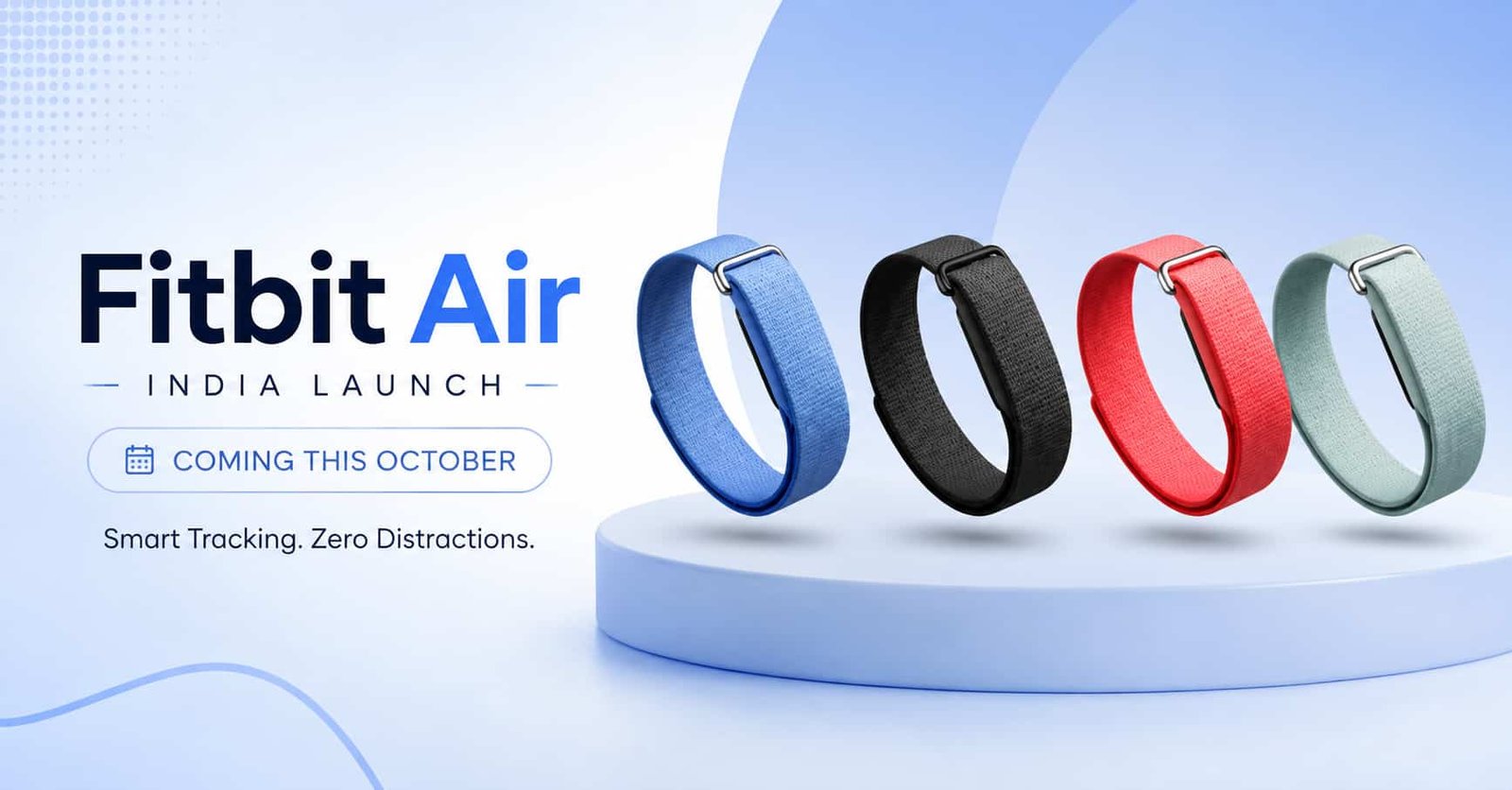
Google has finally put a timeline to something fans have been waiting on for months: the Fitbit Air is officially coming to India this October. This isn’t just another fitness band launch either. It’s Google’s first screenless wearable, and if you’ve been following the wearables space, you’ll know this puts it in direct competition with recovery-focused devices like Whoop. The confirmation didn’t come through a standalone press release, interestingly. Google dropped this news almost casually while addressing media at the recent Pixel 11 launch event in India, telling reporters that the Fitbit Air would land within the next couple of months.
What makes this announcement worth paying attention to is the timing. The Fitbit Air first broke cover back in May this year during its global unveiling, but India pricing and availability had remained a mystery ever since, until now. Adding to the anticipation, the device had already been spotted on the BIS certification portal a few weeks back, so this India confirmation feels less like a surprise and more like the final piece falling into place.
Why the Fitbit Air Is Different From Every Other Fitbit
Here’s where things get genuinely interesting. Every Fitbit device you’ve probably used before came with some sort of screen, whether it was a basic OLED strip for step counts or a full touchscreen for notifications. The Fitbit Air throws that entire formula out the window. There’s no display at all. Instead, Google is betting on a philosophy where the wearable quietly collects your health data in the background while your phone does all the heavy lifting on the interface side.
Instead of glancing down at your wrist mid-workout, the Fitbit Air communicates through gentle haptic buzzes and a tiny status light. Everything else, your sleep insights, recovery scores, coaching tips, lives inside the newly redesigned Google Health app, which is set to fully replace the older Fitbit app. If this sounds familiar, that’s because it mirrors what Whoop has been doing for years, except Google is clearly aiming this at a much wider, more price-conscious audience rather than just serious athletes.
Fitbit Air Specifications and Health Tracking Features
Don’t let the lack of a screen fool you into thinking this is a stripped-down tracker. The Fitbit Air is surprisingly loaded when it comes to actual health monitoring capabilities, and Google seems to be leaning hard into AI-assisted insights this time around.
| Feature | Details |
|---|---|
| Design | Screenless wrist strap, 12 grams with band |
| Heart Monitoring | 24/7 heart rate, HRV, resting heart rate |
| Sleep Tracking | Sleep stages, Sleep Score, Smart Wake |
| Activity Recognition | Auto-tracks 140+ workout types |
| Extra Health Metrics | Weekly cardio load, readiness score, steps, distance |
| Alerts | Silent vibration alarms, status light |
| Companion App | Google Health app |
Beyond the basics, the Fitbit Air continuously tracks your heart rate around the clock and breaks down your sleep into proper stages rather than just giving you a total hours-slept number. It also calculates Heart Rate Variability, which fitness enthusiasts often use to gauge how well their body is recovering from stress or intense training. On the activity side, Google claims the device can automatically detect over 140 different workout types, everything from a casual walk to rowing sessions and structured gym routines, without you needing to manually start a timer.
There’s also a readiness score to help you decide whether your body’s actually up for a tough workout that day, along with weekly cardio load tracking and the usual step-and-distance metrics you’d expect. One neat addition is Smart Wake, a feature designed to nudge you awake at the optimal point in your sleep cycle instead of jolting you out of deep sleep with a harsh alarm. Google also mentions that the machine learning models running on the Fitbit Air are roughly 15 percent more accurate compared to what older Fitbit devices used, which should translate to more reliable readings across the board.
Also, read | Pixel 11 Series Launched in India: Price, Specs, Tensor G6 Chip and Everything Else You Should Know
Fitbit Air and the New Google Health App
A big part of this launch isn’t just the hardware; it’s the software ecosystem wrapped around it. Google has completely rebuilt what used to be the Fitbit app into something now called Google Health, and this new app is what will power the entire Fitbit Air experience. The transition isn’t going to leave anyone stranded either, since Google has confirmed that existing Fitbit app data will automatically carry over once the update rolls out.
The good news for budget-conscious buyers is that you won’t need a subscription just to access your core health metrics. That said, Google is sweetening the deal with a free three-month trial of Google Health Premium, which unlocks the Health Coach feature, adaptive training plans, and detailed logging tools. The Health Coach itself sounds genuinely useful on paper; it can generate personalised workout plans, offer recovery suggestions, and even analyse uploaded medical records, PDFs, or photos to fine-tune its advice based on your actual health history.
Fitbit Air Expected Price in India
This is probably the question on everyone’s mind, and unfortunately, Google hasn’t locked in Indian pricing just yet. For some context, though, the Fitbit Air retails at $99 in the US, which roughly converts to Rs. 9,450 before factoring in Indian taxes and import costs. That’s a meaningful detail because its closest rival, the Whoop 5 band, starts at Rs. 21,990 in India, more than double what the US pricing of the Fitbit Air suggests.
| Device | Approximate Price |
|---|---|
| Fitbit Air (US pricing reference) | ~Rs. 9,450 |
| Whoop 5 (India) | Rs. 21,990 onwards |
Even accounting for import duties and local taxes pushing the final number up, there’s a fair chance the Fitbit Air could undercut Whoop by a significant margin once it officially launches in India. That alone could make it one of the more attractive entry points into serious health tracking for anyone who’s been priced out of the recovery-wearable space until now.
Should You Wait for the Fitbit Air?
If you’re someone who finds constant screen notifications distracting during workouts, or you’ve been eyeing a Whoop but couldn’t justify the price tag, the Fitbit Air genuinely seems worth holding out for. October isn’t too far away, and given how comprehensive the feature list already looks, from AFib alerts to seven-day battery life mentioned in earlier reports, this could turn out to be one of the more compelling wearable launches from Google this year. The only real unknown left is pricing, and that single detail will likely decide whether this becomes a mass-market hit or a niche pick for fitness die-hards.
Frequently Asked Questions
Q1. When is Google planning to bring the Fitbit Air to Indian buyers? Google has confirmed an October 2026 launch window for the Indian market.
Q2. Does the wearable come with any kind of screen? No, it skips a display entirely and relies on haptic buzzes along with a small indicator light instead.
Q3. Which app will buyers need to use alongside the tracker? It pairs with the newly rebuilt Google Health app, which is taking over from the older Fitbit app.
Q4. Is a paid subscription required to view health data? Not necessarily; core metrics remain free, though a three-month trial of Google Health Premium is bundled in for advanced coaching features.
Q5. How does its expected pricing compare with rival wearables? Based on its US price of $99, it’s likely to undercut the Whoop 5, which starts at Rs. 21,990 in India.
Q6. How many workout types can it automatically recognise? Google states the device can detect more than 140 different activities without manual input.
Written by M Akshay for Bestructure.
Latest Posts

Samsung Galaxy F70 5G Launched in India: Price, Specifications, and Is It Worth Buying?

Flipkart Big Billion Days Sale 2026: Best Deals on Smartphones, Laptops, TVs and More
Samsung Galaxy A56 5G Review: Is This the Best Mid Range Samsung Phone You Can Buy Right Now
Vivo V80 5G India Launch on October 6: Price, Specifications, Camera and Battery Details

Poco M8 Power 5G Price In India Review: Big Battery, Bright Display, But Here Is What It Skips
Fitbit Air Launched in India at Rs 13,999: Price, Features, and How It Compares to Whoop 5
One UI 9 Update Rolling Out to Galaxy S26: New Features, Rollout Status, and How to Download

Realme 16 Pro Harry Potter Edition: Price, Design, and Everything Fans Should Know Before Buying

Redmi Note 17 Pro and Pro Max Launched in India: Price, Specifications, and Everything Worth Knowing

Microsoft Humanist AI Code of Conduct Explained: Why the Company Is Choosing Safety Over Speed

GPT-6 Astra Explained: What OpenAI’s Most Powerful Model Can Actually Do