Written by M Akshay | Bestructure
Published: November 5, 2026, 10:22 PM IST | Last Updated: November 5, 2026, 10:22 PM IST
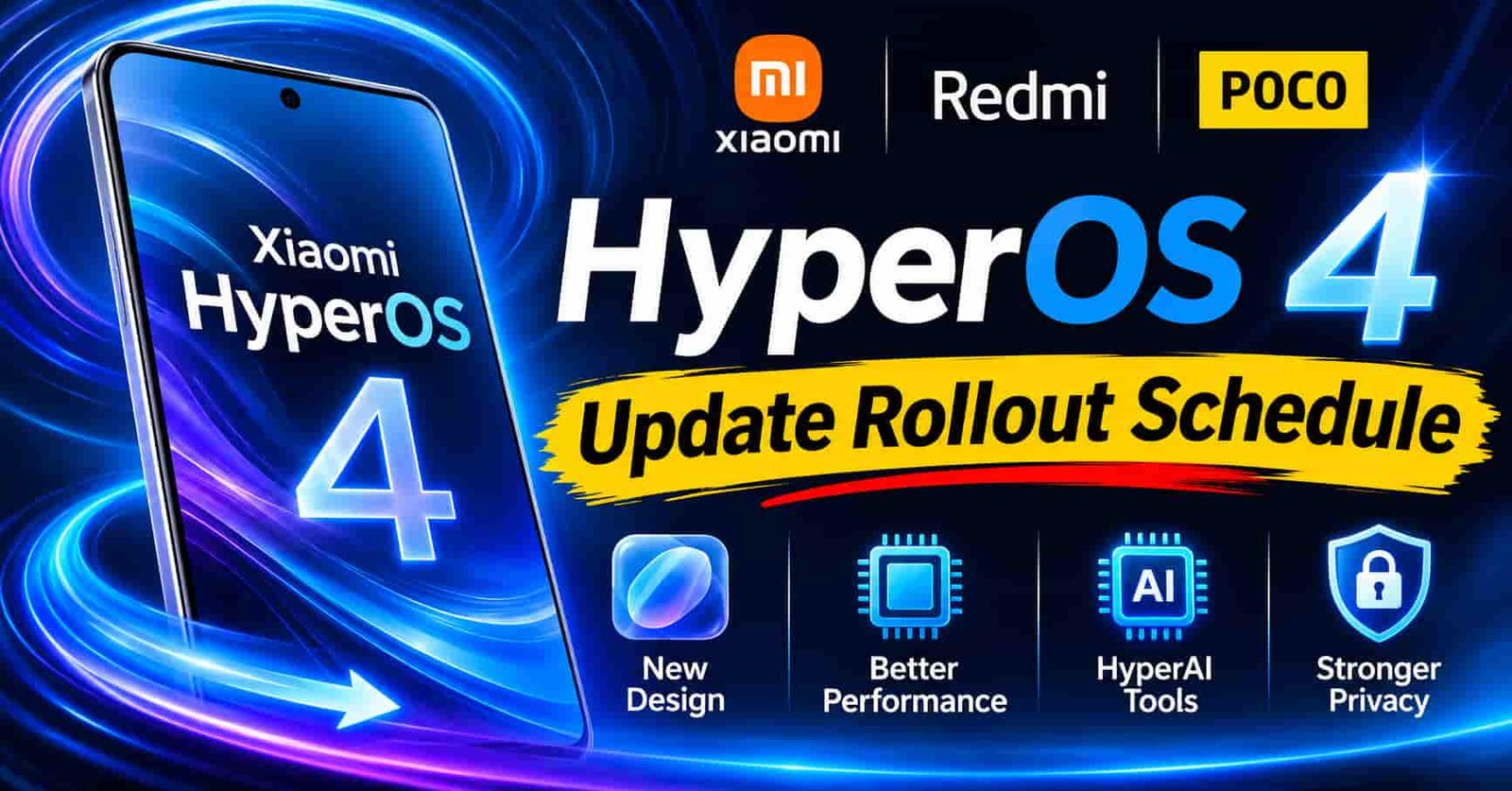
If you use a Xiaomi, Redmi or POCO phone, the HyperOS 4 update is probably the news you have been waiting for. Xiaomi has published its global rollout plan, and the list is bigger than many people expected: 82 devices in total, made up of 67 smartphones and 15 tablets. The stable rollout starts in early November 2026 and runs through December, and it even reaches older phones like the Xiaomi 13T series from 2023.
But a long list does not tell you what really matters. Will your phone get it, when, and is it worth installing? We went through the official schedule and several detailed reports to answer those questions in simple words.
HyperOS 4 Update: How the Rollout Works
Xiaomi is releasing the update in three waves. The first group gets it in early November, the second in mid November, and the rest in December. One important point before you check the list: Xiaomi calls these estimated windows, not guaranteed dates. The order of devices inside each list does not show who gets it first, and timing can differ by region, carrier and model.
| Wave | Timing | Devices |
|---|---|---|
| Wave 1 | Early November 2026 | 26 (24 phones, 2 tablets) |
| Wave 2 | Mid November 2026 | 23 (16 phones, 7 tablets) |
| Wave 3 | December 2026 | 33 (27 phones, 6 tablets) |
HyperOS 4 Update Schedule: Early November 2026
| Brand | Devices |
|---|---|
| Xiaomi | Xiaomi 17 Ultra, Leica Leitzphone powered by Xiaomi, Xiaomi 17, Xiaomi 17T Pro, Xiaomi 17T |
| Redmi | Redmi Note 15 Pro+ 5G, Note 15 Pro 5G, Note 15 Pro, Note 15 5G, Note 15, Redmi 17 5G, Redmi 17, Redmi 17C 5G, Redmi 15C 5G, Redmi 15C |
| POCO | POCO F8 Ultra, F8 Pro, X8 Pro Max, X8 Pro, X8 Pro Iron Man Edition, M8 Pro, M8, C95 Pro, C85 |
| Tablets | Xiaomi Pad 8 Pro, Xiaomi Pad 8 |
HyperOS 4 Update Schedule: Mid November 2026
| Brand | Devices |
|---|---|
| Xiaomi | Xiaomi 15 Ultra, Xiaomi 15, Xiaomi 15T Pro, Xiaomi 15T |
| Redmi | Redmi Note 17 Pro Max 5G, Note 17 Pro 5G, Note 17 5G, Note 17 |
| POCO | POCO F9 Ultra, F9 Pro, F7 Ultra, F7 Pro, F7, X8, X7 Pro, X7 Pro Iron Man Edition |
| Tablets | Xiaomi Pad 7 Pro, Pad 7, Pad Mini, Redmi Pad 2 Pro 5G, Redmi Pad 2 Pro, POCO Pad X1, POCO Pad M1 |
HyperOS 4 Update Schedule: December 2026
| Brand | Devices |
|---|---|
| Xiaomi | Xiaomi MIX Flip, Xiaomi 14 Ultra, 14, 13 Ultra, 13 Pro, 13, Xiaomi 14T Pro, 14T, 13T Pro, 13T |
| Redmi | Redmi Note 14 Pro+ 5G, Note 14 Pro 5G, Note 14 Pro, Note 14 5G, Note 14, Redmi 15 5G, Redmi 15, Redmi 14S, Redmi A7 Pro |
| POCO | POCO F6 Pro, F6, X8s, X7, X6 Pro, M8s 5G, M7, C81 Pro |
| Tablets | Xiaomi Pad 6S Pro 12.4, Redmi Pad 2 9.7, Redmi Pad 2 9.7 4G, Redmi Pad 2, Redmi Pad 2 4G, POCO Pad C1 |
Note: some reports describe the first wave slightly differently from Xiaomi’s own schedule. For example, the Xiaomi 15 series appears in mid November on the official list, so always follow the official schedule.
What’s New in HyperOS 4
The most visible change is the design. Xiaomi calls it Soft Light Glass, a style built around see through panels, light effects and layered depth. You get redesigned notifications, customisable lock screens, larger clock widgets, resizable home screen folders and stacked widgets. The look shares some ideas with Apple’s Liquid Glass style. Tablets also gain better floating window support and improved handling of app orientation, which helps with multitasking.
Better Integration With iPhones
Xiaomi has also worked on connecting with iOS. HyperOS 4 makes it easier to share photos, files, contacts and web pages with iPhone users, which should be helpful in mixed households and workplaces.
Performance: What Xiaomi’s Tests Show
| Test | HyperOS 3 | HyperOS 4 |
|---|---|---|
| Launching 30 apps after nine hours of use | 40.3 seconds | 36.8 seconds (about 8.7% faster) |
| HDR photo capture time | 313.38 milliseconds | 240.16 milliseconds (about 23.4% faster) |
| Frame drops during video playback | 2.92% | 1.10% |
These are Xiaomi’s own lab results, not independent benchmarks, so real world gains may vary by device. Older phones in particular may not see the same improvements.
HyperAI: New AI Tools
Xiaomi is also expanding its AI features under the HyperAI name:
| Feature | What It Does |
|---|---|
| AI Voice Notes | Turns recordings into structured notes, pulls out tasks, and makes mind maps |
| AI Speech Recognition | Summarises meetings, picks key points, and builds outlines |
| AI Translate Conversation | Supports face to face translation |
| AI Gallery Search | Helps you find specific photos |
| AI Creativity Assistant | Supports creative tasks |
In China, Xiaomi has upgraded its Super XiaoAi assistant to version 2.0 using its MiMo language model, and reports say it can search photos, organise schedules, control compatible smart home devices and identify products on screen. Do not assume all of this will reach the global version, because some features depend on device, region and language. Super Island is also said to support more than 130 services.
Privacy and Security Changes
On privacy, Xiaomi is adding post quantum encryption for key delivery in certain end to end encrypted situations, along with data security from device to cloud for AI features. It is also adding confirmation prompts before sensitive actions such as deleting or sharing information. Some of these protections work only on supported devices and services.
Also, read
Poco M8 Power 5G Price In India Review: Big Battery, Bright Display, But Here Is What It Skips
How to Get the HyperOS 4 Update
Once your phone’s turn comes, you will usually see a notification. You can also open Settings, go to the About phone section, and check for updates, though menu names can vary slightly. Before installing, back up your data, connect to stable internet, and keep your battery well charged. If nothing appears yet, it simply means the rollout has not reached your region or phone, so check again in a few days rather than using unofficial files.
Is the HyperOS 4 Update Worth Installing?
For most users, yes. The fresh design, AI tools and performance work add real value, and the longer list of supported phones is good news for owners of older devices like the Xiaomi 13T. Just keep expectations realistic: not every phone will get every feature, and the speed gains come from Xiaomi’s own tests.
Frequently Asked Questions
Q1. How many devices will get the HyperOS 4 update? Xiaomi has confirmed 82 devices, including 67 smartphones and 15 tablets across the Xiaomi, Redmi and POCO brands.
Q2. When will the HyperOS 4 update arrive? The global stable rollout runs from early November through December 2026, in three waves.
Q3. Is the rollout date guaranteed for my phone? No. Xiaomi says these are estimated windows, and timing varies by region, carrier and model.
Q4. What is Soft Light Glass? It is the new design style in HyperOS 4, with translucent panels, light effects and layered depth.
Q5. Will every new feature come to my phone? Not necessarily. Some features depend on your device, region and language.
Disclaimer: The information in this article has been gathered by researching Xiaomi’s official rollout schedule and multiple credible technology publications covering HyperOS 4. Rollout timing and feature availability can change, and performance figures are from Xiaomi’s own testing. Please check Xiaomi’s official website or your phone’s update menu for confirmed details.
Written by M Akshay for Bestructure.
Latest Posts
Samsung Galaxy Z Fold 9 Under Display Camera: What the Leak Says and How Much You Can Trust It

Apple AirPods 5: Price in India, Features, ANC, Battery Life, and Is It Worth Buying?
Vivo S2 FE 5G Launched in India: Price, Specifications, and Is the 10000mAh Battery Enough to Buy It?

John Ternus TIME Interview: iPhone Duo, Apple’s AI Plan, and What the New CEO Really Cares About
Samsung Galaxy F70 5G Launched in India: Price, Specifications, and Is It Worth Buying?

Flipkart Big Billion Days Sale 2026: Best Deals on Smartphones, Laptops, TVs and More
Samsung Galaxy A56 5G Review: Is This the Best Mid Range Samsung Phone You Can Buy Right Now
Vivo V80 5G India Launch on October 6: Price, Specifications, Camera and Battery Details
Poco M8 Power 5G Price In India Review: Big Battery, Bright Display, But Here Is What It Skips

Fitbit Air Launched in India at Rs 13,999: Price, Features, and How It Compares to Whoop 5
One UI 9 Update Rolling Out to Galaxy S26: New Features, Rollout Status, and How to Download