
Written by M Akshay | Bestructure
Published: September 19, 2026, 11:07 PM IST | Last Updated: September 19, 2026, 11:07 PM IST
Xiaomi has just rounded out its Note 17 lineup in India with the arrival of the Redmi Note 17 Pro and the brand new Redmi Note 17 Pro Max, the series’ first ever top tier variant. Together, these two join the standard Redmi Note 17 that debuted earlier, giving buyers three distinct options depending on how much power, battery, and camera performance they actually need. If the base model was Xiaomi’s answer to affordable reliability, the Redmi Note 17 Pro series feels like the company’s attempt at proving flagship level durability and endurance don’t have to come with flagship level pricing.
What genuinely sets this launch apart is how seriously Xiaomi has leaned into build quality this time around. Both phones are engineered around what the company calls its Titan Structure, combining reinforced motherboards, strengthened mid frames, and Corning Gorilla Glass Victus 2 protection. That’s backed up by proper third party validation too, with both devices earning TUV SUD five star Titan Quality Certification alongside SGS certified drop resistance from up to three metres onto granite surfaces, a genuinely rare claim to see at this price point.
Redmi Note 17 Pro and Pro Max Price in India and Availability
Starting with the numbers everyone actually cares about, the Redmi Note 17 Pro opens at Rs 36,999 for the base 8GB plus 128GB configuration, while stepping up to 256GB of storage pushes that to Rs 39,999. The Redmi Note 17 Pro Max, being the more premium sibling, starts noticeably higher at Rs 49,999 for its 8GB plus 256GB variant, with the top spec 12GB plus 256GB option landing at Rs 55,999.
| Model | Configuration | Price |
|---|---|---|
| Redmi Note 17 Pro | 8GB + 128GB | Rs 36,999 |
| Redmi Note 17 Pro | 8GB + 256GB | Rs 39,999 |
| Redmi Note 17 Pro Max | 8GB + 256GB | Rs 49,999 |
| Redmi Note 17 Pro Max | 12GB + 256GB | Rs 55,999 |
Xiaomi is also sweetening the deal with an instant discount of up to Rs 5,000 for SBI, Axis Bank, and IDFC First Bank cardholders, or an equivalent cashback offer of up to Rs 5,000 through HDB Financial Services, effectively bringing both phones closer to their true value price for anyone eligible.
As for actually getting your hands on one, the Redmi Note 17 Pro goes on sale first, starting September 17, followed by the Redmi Note 17 Pro Max a week later on September 23. Both phones will be available through Amazon, Xiaomi’s own online store, Xiaomi retail outlets, and select offline partners. Colour wise, the standard Pro comes in Cloud Blue, Purple Vibe, and Stealth Black, while the Pro Max gets its own distinct palette of Matcha Green, Secret Sunrise, and Stealth Black.
Redmi Note 17 Pro and Pro Max Display: Shared Strength Across Both Models
Here’s some genuinely good news for anyone worried the standard Pro might feel like a watered down version of its Max sibling, the display experience is essentially identical across both phones. You’re getting a 6.83 inch 1.5K AMOLED panel on either device, running at a smooth 120Hz refresh rate with peak brightness touching an impressive 3,500 nits. Touch responsiveness gets a serious boost too, with instantaneous sampling rates climbing as high as 3,200Hz, alongside HDR10+, Dolby Vision, and full DCI-P3 colour coverage.
Xiaomi has also carried over its Wet Touch 2.0 technology to both models, meaning the touchscreen should remain reliably responsive even if your fingers are damp or the screen has picked up a bit of moisture, a small but genuinely useful addition for anyone using their phone in humid conditions or light rain.
Where the Redmi Note 17 Pro and Pro Max Actually Differ
While the display and design language stay consistent, the real separation between these two phones shows up the moment you look under the hood. The Redmi Note 17 Pro Max is powered by Qualcomm’s newer Snapdragon 6 Gen 5 chipset, clocking up to 2.6GHz, while the standard Redmi Note 17 Pro settles for the slightly older Snapdragon 6s Gen 4, topping out at 2.4GHz. Memory follows a similar pattern, with the Pro Max offering faster LPDDR5X RAM paired with UFS 4.1 storage, compared to the Pro’s LPDDR4X memory and comparatively slower storage standard.
| Specification | Redmi Note 17 Pro | Redmi Note 17 Pro Max |
|---|---|---|
| Chipset | Snapdragon 6s Gen 4 | Snapdragon 6 Gen 5 |
| RAM Type | LPDDR4X | LPDDR5X |
| Storage | Up to 256GB UFS 3.1 | 256GB UFS 4.1 |
| Battery | 9,000mAh | 10,000mAh |
| Charging | 67W wired, 22.5W reverse | 100W wired, 27W reverse |
| Front Camera | 16MP | 32MP |
| Camera Aperture | f/1.8 main | f/1.5 main |
| Video Recording (Front) | Up to 1080p | Up to 4K |
| Weight | Around 223 grams | Around 229 grams |
Battery capacity tells a similar story. The Redmi Note 17 Pro Max houses a substantial 10,000mAh cell supported by 100W fast charging, easily capable of topping up quickly despite its size, while the standard Pro still packs a genuinely solid 9,000mAh battery backed by 67W charging, more than adequate for a full day of heavy use even if it trails behind its Max counterpart.
Redmi Note 17 Pro and Pro Max Camera Performance

Both phones share the same core camera hardware in terms of megapixel count, a 50MP primary sensor with optical image stabilisation paired with an 8MP ultrawide lens, but the finer details diverge in ways that actually matter for photography enthusiasts. The Pro Max gets a wider f/1.5 aperture on its main sensor compared to the Pro’s f/1.8, theoretically allowing more light in for better low light performance, and its rear camera setup supports 4K video recording, while the standard Pro caps out at 1080p.
Also, read
Selfie cameras follow the same premium tiered approach, with the Pro Max featuring a sharp 32MP front camera capable of 4K recording, while the standard Pro includes a 16MP shooter limited to 1080p video. Both phones come loaded with Xiaomi’s newer AI powered editing tools, including AI Glare Removal and AI Erase Pro, alongside built in access to Google Gemini and Circle to Search for quick on screen lookups.
Redmi Note 17 Pro and Pro Max Durability and Software Support
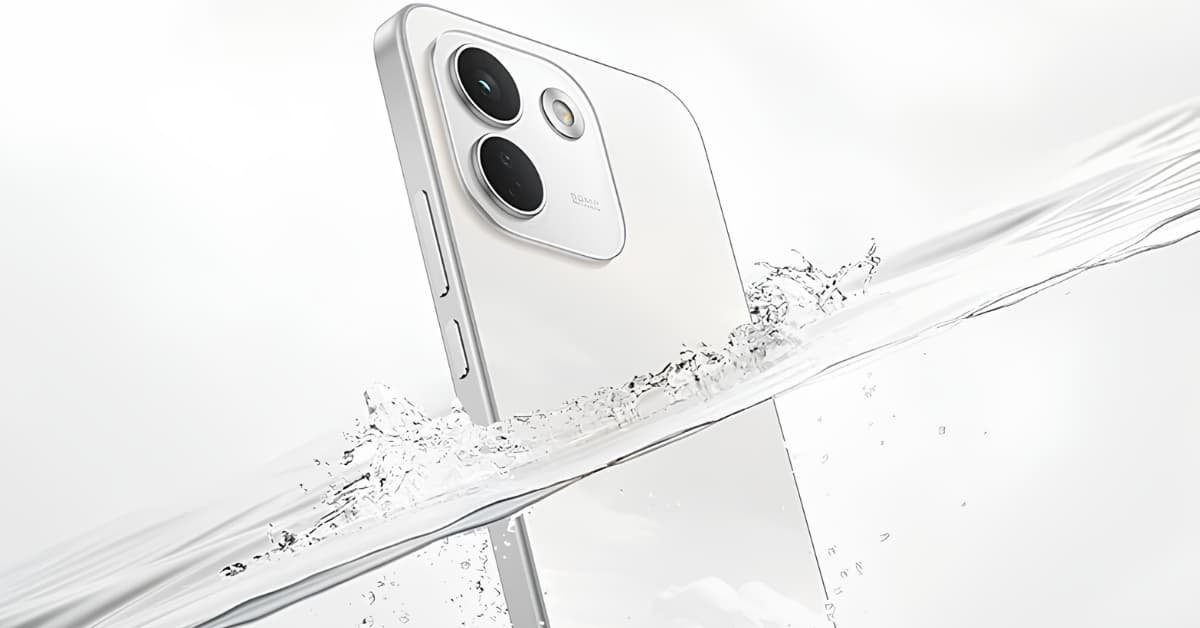
This might genuinely be where the Redmi Note 17 Pro series earns its keep. Both phones carry IP66, IP68, IP69, and IP69K ratings, verified through a rigorous two metre, 72 hour submersion test, and supported by a dedicated Underwater Mode for good measure. That’s a remarkably comprehensive durability claim for phones sitting well under Rs 60,000, and it’s backed by genuine third party certification rather than just marketing language.
On the software side, both models ship with Android 16 running Xiaomi’s HyperOS 3 out of the box, and Xiaomi is promising four major OS upgrades alongside a lengthy six years of security updates. The Pro Max specifically also comes with a promised six year smoothness guarantee, aimed at keeping the interface feeling responsive well beyond the typical usable lifespan of most mid range phones.
Should You Buy the Redmi Note 17 Pro or the Pro Max?
If your budget comfortably stretches towards Rs 50,000, the Redmi Note 17 Pro Max is genuinely difficult to overlook, offering a noticeably stronger chipset, faster charging, a sharper selfie camera, and better low light photography, all wrapped inside the same reinforced, durability tested chassis as its sibling. However, if you’re trying to stay closer to the Rs 37,000 to Rs 40,000 range, the standard Redmi Note 17 Pro doesn’t feel like a significant compromise either, since it retains the exact same display quality, build durability, and software support timeline, just with slightly more modest internals.
Either way, Xiaomi has clearly built this generation around the idea that durability and long term reliability shouldn’t be reserved exclusively for premium flagships, and that alone makes the Redmi Note 17 Pro series worth genuine consideration if you’re shopping in this segment right now.
Frequently Asked Questions
Q1. What is the core difference between the Redmi Note 17 Pro and Pro Max? The Pro Max gets a faster Snapdragon 6 Gen 5 chipset, a larger 10,000mAh battery, quicker 100W charging, and a sharper 32MP selfie camera compared to the standard Pro model.
Q2. When do these phones actually go on sale in India? The Redmi Note 17 Pro becomes available starting September 17, while the Redmi Note 17 Pro Max follows a week later on September 23.
Q3. How durable are these phones compared to typical mid range devices? Both carry IP66, IP68, IP69, and IP69K ratings verified through extended submersion testing, along with SGS certified drop resistance up to three metres, well beyond what most phones in this price range offer.
Q4. Do both models get the same software update commitment? Yes, both phones are promised four major OS upgrades and six years of security updates, with the Pro Max additionally offering a six year smoothness guarantee.
Q5. Which model offers better value for someone on a tighter budget? The standard Redmi Note 17 Pro retains the same display quality and durability as the Pro Max at a noticeably lower starting price, making it the more budget friendly pick without major compromises.
Disclaimer: The details covered in this article have been compiled through careful research across multiple published tech reports and specification listings related to the Redmi Note 17 Pro series. Every effort has been made to present this information accurately and in our own original words, and readers are encouraged to verify final specifications and regional variations directly through Xiaomi’s official channels before making a purchase decision.
Written by M Akshay for Bestructure.
Latest Posts

Samsung Galaxy A56 5G Review: Is This the Best Mid Range Samsung Phone You Can Buy Right Now

Vivo V80 5G India Launch on October 6: Price, Specifications, Camera and Battery Details
Poco M8 Power 5G Price In India Review: Big Battery, Bright Display, But Here Is What It Skips

Fitbit Air Launched in India at Rs 13,999: Price, Features, and How It Compares to Whoop 5

One UI 9 Update Rolling Out to Galaxy S26: New Features, Rollout Status, and How to Download

Realme 16 Pro Harry Potter Edition: Price, Design, and Everything Fans Should Know Before Buying

Microsoft Humanist AI Code of Conduct Explained: Why the Company Is Choosing Safety Over Speed

GPT-6 Astra Explained: What OpenAI’s Most Powerful Model Can Actually Do
Poco X8 and Poco X8 Power Launched in India: Price, Specifications, and Which One You Should Actually Buy

Nvidia Acquires Hugging Face for 13 Billion Dollars: Here’s Why This Deal Matters
Vivo T5 India Launch: Price, Specifications, and Everything Worth Knowing Before You Buy