Written by M Akshay | Bestructure
Published: September 4, 2026, 11:55 PM IST | Last Updated: September 4, 2026, 11:55 PM IST
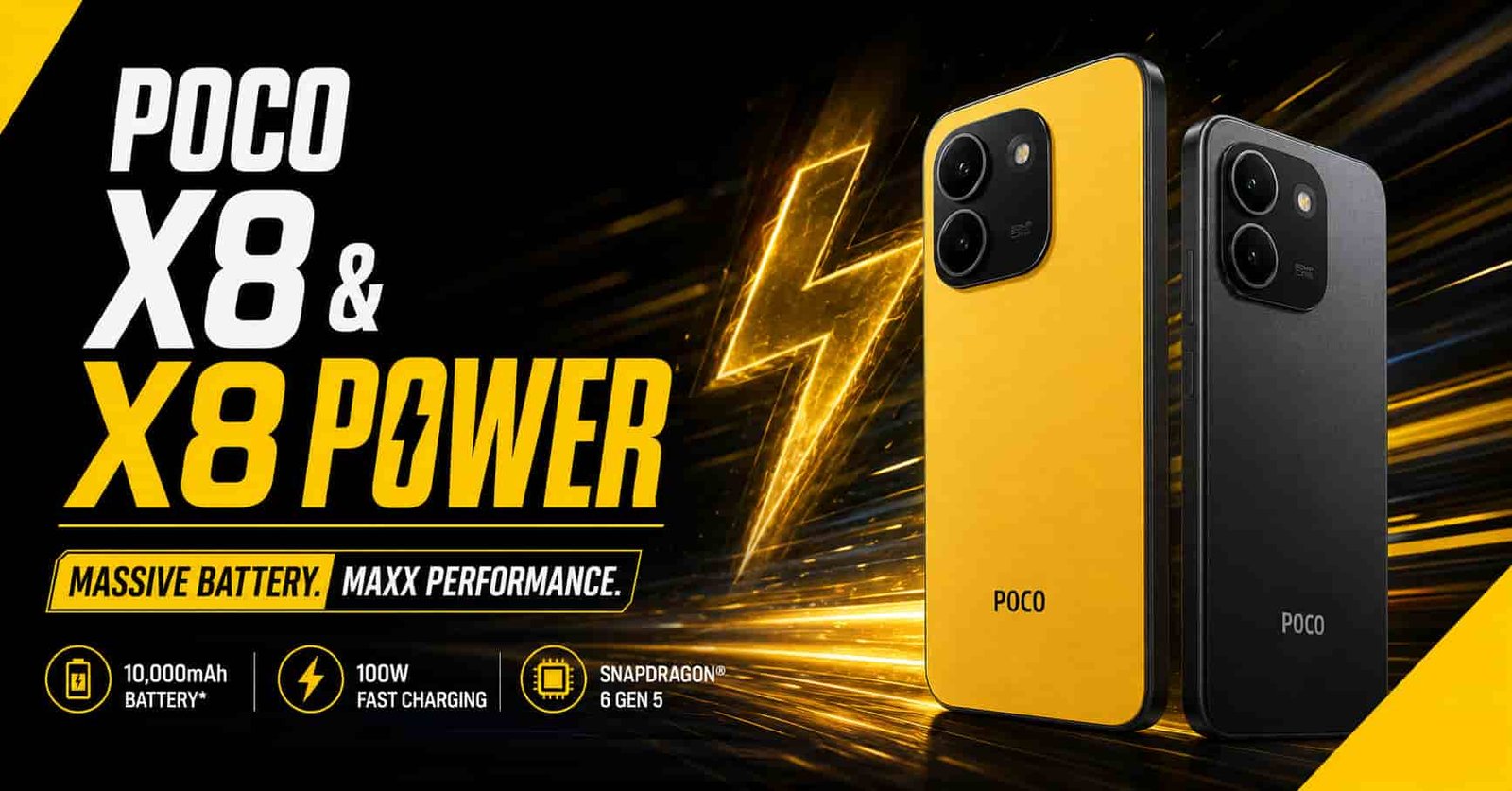
Poco just expanded its X8 lineup in India, and this time the focus is almost entirely on battery life. The company has introduced both the standard Poco X8 and a beefed up Poco X8 Power, joining the already available Poco X8 Pro and Pro Max in the same series. If you’ve been following Poco’s recent launches, you’ll notice a clear pattern forming here, massive batteries, AMOLED displays, and pricing aimed squarely at buyers who don’t want to compromise on either.
What makes this particular launch worth paying attention to is how differently these two phones are positioned despite sharing a good chunk of their hardware. One clearly prioritises raw battery capacity above everything else, while the other aims for a more balanced, slightly more affordable experience. Let’s break down exactly what separates them, and more importantly, which one actually makes sense for your money.
Poco X8 and X8 Power Price in India and Availability
The price of Poco X8 starts at Rs 29,999, while the Poco X8 Power at Rs 35,999 for its base configuration in India. Poco is also running a launch offer that includes a Rs 2,000 coupon discount along with an additional Rs 1,000 bank or exchange bonus, effectively bringing the starting prices down to Rs 26,999 and Rs 32,999 respectively.
| Model | Configuration | Price |
|---|---|---|
| Poco X8 | 6GB + 128GB | Rs 29,999 |
| Poco X8 | 8GB + 128GB | Rs 32,999 |
| Poco X8 Power | 8GB + 128GB | Rs 35,999 |
| Poco X8 Power | 8GB + 256GB | Rs 38,999 |
Both phones go on sale starting September 11 at 12 noon, sold exclusively through Flipkart. Poco is also offering no cost EMI options stretched over 12 months, starting around Rs 2,250 per month for the X8 and Rs 2,750 per month for the X8 Power, which could make either phone easier to justify if you’d rather split the cost.
As for colours, the Poco X8 Power comes in just two shades, Black and Yellow, while the standard Poco X8 gets a slightly wider choice with Black, Fiery Orange, and Frost White.
Poco X8 Power vs Poco X8: What’s Actually Different
Here’s where things get interesting. On the surface, both phones look nearly identical, same 6.83 inch display size, same design language, same software experience. But dig a little deeper and the differences start showing up in exactly the areas that matter most for everyday use.
| Specification | Poco X8 | Poco X8 Power |
|---|---|---|
| Display | 6.83 inch 1.5K AMOLED, 120Hz | 6.83 inch 1.5K AMOLED, 120Hz |
| Peak Brightness | Up to 3,200 nits | Up to 3,500 nits |
| Chipset | Snapdragon 6s Gen 4 | Snapdragon 6 Gen 5 |
| RAM | Up to 8GB LPDDR4X | Up to 8GB LPDDR5X |
| Storage | Up to 256GB UFS 3.1 | Up to 256GB UFS 4.1 |
| Battery | 9,000mAh | 10,000mAh |
| Charging | 67W wired, 22.5W reverse | 100W wired, 27W reverse |
| Rear Camera | 50MP OIS + 2MP depth | 50MP OIS + 8MP ultrawide |
| Front Camera | 16MP | 32MP |
| Weight | 226 grams | 229 grams |
The Power variant clearly earns its name. It carries a larger 10,000mAh battery against the standard model’s already generous 9,000mAh, and backs that up with noticeably faster 100W charging compared to 67W on the regular X8. You’re also getting a newer Snapdragon 6 Gen 5 chipset, faster LPDDR5X memory, and quicker UFS 4.1 storage on the higher end variants, none of which the standard X8 gets access to.
Camera wise, the Power model swaps out the standard X8’s basic 2MP depth sensor for a genuinely useful 8MP ultrawide lens, and doubles the selfie camera resolution from 16MP to a much sharper 32MP. If photography, especially selfies and wide shots, matters to you even slightly, that alone might tip the decision towards the Power variant.
Poco X8 and X8 Power Display and Build Quality
Both phones share the same 6.83 inch 1.5K AMOLED panel, running at a smooth 120Hz refresh rate with HDR10+ and Dolby Vision support baked in, making either phone genuinely solid for streaming and casual gaming. The Power model does edge ahead slightly with a higher 3,500 nits peak brightness compared to 3,200 nits on the standard X8, along with support for up to 3,200Hz touch sampling when Game Turbo mode kicks in.
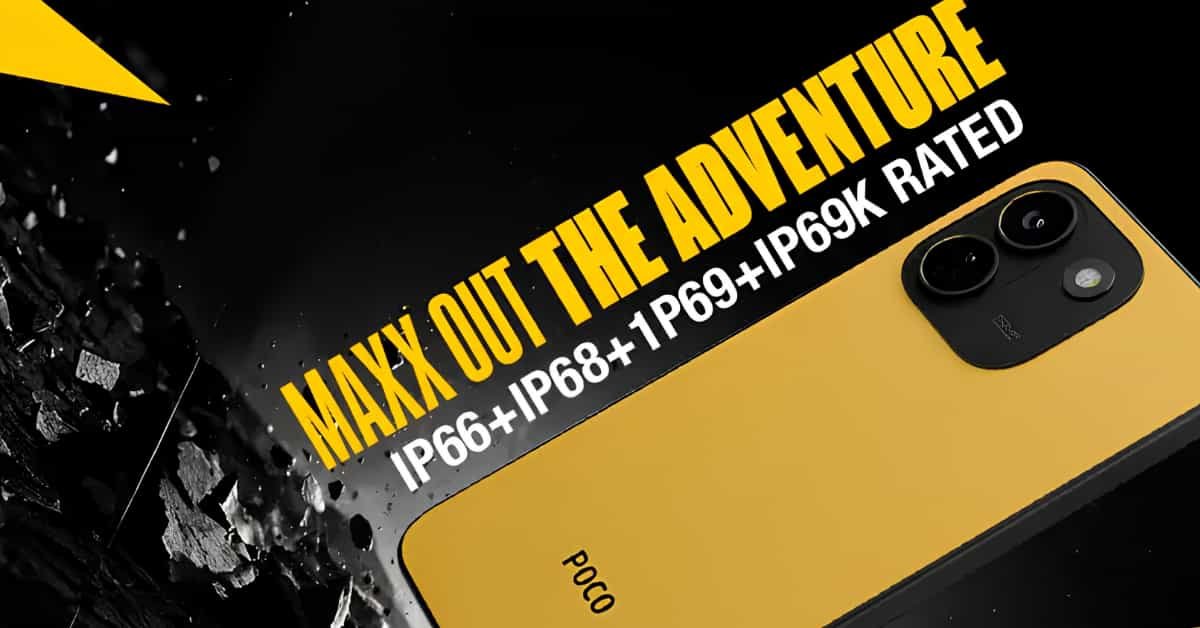
Durability is treated seriously across both models. You get IP66, IP68, IP69, and IP69K ratings on each phone, meaning they can handle everything from dust exposure to high pressure water jets without issue. Corning Gorilla Glass Victus 2 protects the front on both devices, and Poco has also added its own Titan quality branding along with double five star certifications from SGS and TÜV, which is a fairly unusual level of durability testing to see at this price point.
Also, read
Nvidia Acquires Hugging Face for 13 Billion Dollars: Here’s Why This Deal Matters
Poco X8 and X8 Power Software and Update Policy
Both phones run Xiaomi’s HyperOS 3, built on top of Android 16 straight out of the box. Poco is promising 4 major Android version upgrades along with a solid 6 years of security patches for both models, which is genuinely reassuring for anyone planning to hold onto their phone for the long haul rather than upgrading every year.
How Does the Poco X8 Power Compare to Rivals?
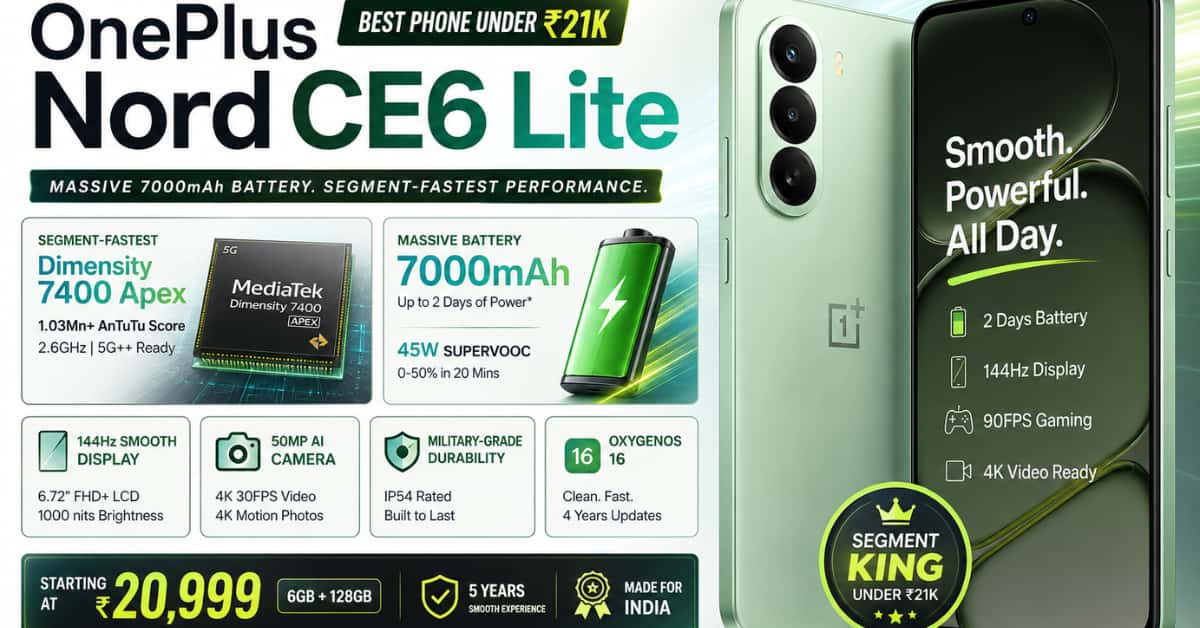
The Poco X8 Power’s closest rival right now is arguably the OnePlus Nord CE6, which also leans heavily on battery capacity with its own large 8,000mAh cell. However, the OnePlus comes equipped with a more powerful Snapdragon 7s Gen 4 chipset, and typically costs around Rs 3,000 more than the X8 Power. If raw battery size and value for money matter more to you than peak performance, the Poco clearly has the upper hand here.
Meanwhile, the standard Poco X8 finds itself in a fairly unique position of its own. It’s genuinely one of the few phones under Rs 30,000 right now that manages to combine a capable mid range Snapdragon chipset, a proper AMOLED display, and a battery this large, all in one package. At its effective launch price of Rs 26,999, it comfortably counts among the stronger all rounders in its segment at the moment.
Which One Should You Actually Buy?
If squeezing every last hour of battery life out of your phone is your top priority, and you’re comfortable spending a bit extra, the Poco X8 Power makes a genuinely strong case for itself, especially with that 100W charging speed cutting down wait times significantly. But if you’re trying to stretch your budget while still getting a phone that handles daily use, gaming, and streaming comfortably, the standard Poco X8 offers nearly all the essentials at a noticeably lower price.
Either way, both phones are clearly built for people who consume a lot of content on their phones, students juggling online classes, professionals who rely on their phone throughout the day, or anyone simply tired of hunting for a charger every few hours.
Frequently Asked Questions
Q1. What genuinely separates the Poco X8 Power from the regular Poco X8? The Power variant gets a larger 10,000mAh battery, faster 100W charging, a newer Snapdragon 6 Gen 5 chipset, and an upgraded camera setup compared to the standard model.
Q2. When can buyers actually purchase these phones after the announcement? Both phones go on sale starting September 11 at 12 noon, available exclusively through Flipkart.
Q3. How long will Poco continue supporting these devices with updates? Buyers can expect 4 major Android upgrades along with 6 years of ongoing security patch support on both models.
Q4. Is the Poco X8 Power worth the extra money over the standard X8? It depends on your priorities. The Power model justifies its higher price through faster charging, a bigger battery, and a noticeably better camera setup, while the standard X8 remains the more budget friendly all rounder.
Q5. How do these phones compare against the OnePlus Nord CE6? The Nord CE6 offers a slightly more powerful processor, but the Poco X8 Power typically costs around Rs 3,000 less while still offering a larger effective battery advantage.
Disclaimer: The details shared in this article have been compiled after researching multiple published tech reports and comparing the specifications listed across various credible sources online. Every effort has been made to present accurate, up to date information in our own words, though readers are encouraged to verify final pricing and availability directly through Poco’s official channels or Flipkart before making a purchase decision.
Written by M Akshay for Bestructure.
Latest Posts
Vivo S2 FE 5G Launched in India: Price, Specifications, and Is the 10000mAh Battery Enough to Buy It?

John Ternus TIME Interview: iPhone Duo, Apple’s AI Plan, and What the New CEO Really Cares About
Samsung Galaxy F70 5G Launched in India: Price, Specifications, and Is It Worth Buying?

Flipkart Big Billion Days Sale 2026: Best Deals on Smartphones, Laptops, TVs and More
Samsung Galaxy A56 5G Review: Is This the Best Mid Range Samsung Phone You Can Buy Right Now
Vivo V80 5G India Launch on October 6: Price, Specifications, Camera and Battery Details
Poco M8 Power 5G Price In India Review: Big Battery, Bright Display, But Here Is What It Skips

Fitbit Air Launched in India at Rs 13,999: Price, Features, and How It Compares to Whoop 5
One UI 9 Update Rolling Out to Galaxy S26: New Features, Rollout Status, and How to Download

Realme 16 Pro Harry Potter Edition: Price, Design, and Everything Fans Should Know Before Buying
Redmi Note 17 Pro and Pro Max Launched in India: Price, Specifications, and Everything Worth Knowing